History traces the acoustic guitar back over 4,000 years, which is kind of wild when you think about what’s sitting in your lap right now. You’re not just holding an instrument, you’re holding a long chain of ideas passed from ancient lutes to Spanish guitarras to the modern flattop you see on stage.
As you dig into this story, you’ll see how your favorite acoustic sound didn’t just appear out of nowhere – it slowly evolved, piece by piece, so you can strum along today without even thinking about it.
Key Takeaways:
- Early acoustic guitars actually grew out of super old instruments like the oud and lute, so what we call a “classic” guitar is really the latest version of a long chain of experiments and redesigns.
- The modern acoustic guitar shape and six-string setup mostly came together in the 1800s in Spain, with builders like Antonio Torres tweaking body size, bracing, and string length so the thing could finally be loud enough for real audiences.
- Every big music wave – folk, blues, country, rock, even early pop – used acoustic guitars in its own way, so when you strum one today, you’re kind of tapping into this huge mix of cultures, places, and styles all at once.
Where It All Started: The Origins of the Acoustic Guitar
Archaeologists have found stringed instruments over 3,500 years old, so your acoustic guitar actually has ancestors older than most written languages. Instead of steel strings and spruce tops, people were stretching gut over hollow shells, wooden boxes, and even turtle shells to amplify sound.
You’re basically holding the great-great-grandchild of ancient lutes and harps every time you strum a chord, just updated with better woods, cleaner design, and, thankfully, way more tuning stability.
Seriously, How Did We Get Here?
By the 13th century, you already had instruments like the oud and the lute traveling across Europe, shaping what your modern acoustic looks and feels like. Craftspeople kept tweaking body size, adding frets, and shifting from 4 courses of strings to 5 and eventually 6 single strings.
So when you play a simple G chord, you’re using a layout that took hundreds of years of trial, error, and a lot of patient builders to lock in.
The Role of Different Cultures in Shaping the Guitar
From Middle Eastern ouds to Spanish vihuelas, your acoustic guitar is basically a cultural mash-up in instrument form. Traders carried the oud into Europe, Spanish makers in the 1400s turned it into the vihuela, and by the 1800s, Antonio Torres in Spain blew up the guitar body size, giving you that rich, open tone you expect today.
So every time you play, you’re actually hearing a mix of ideas that traveled across continents and centuries.
Arabic musicians in the 8th century used the oud in courts from Baghdad to Cordoba, and when that sound hit Spain, builders there reimagined it into the vihuela to fit local music and tuning styles.
You then had European lutes evolving in courts in France and Italy, where players wanted more range, so makers added courses and changed body shapes, which quietly nudged the guitar closer to what you’re used to.
Later, Spanish culture pushed the 6-string classical guitar into the spotlight, while Latin American players shaped rhythmic styles and tunings that fed right back into the instrument’s design.
So your modern acoustic isn’t just “Spanish” or “European” at all, it’s a living playlist of global influences that ended up in your hands.
Big Changes: The Evolution Over the Years
As more players chase that vintage vibe on TikTok and YouTube, you start noticing how wildly your acoustic has changed from the old days. Steel strings took over gut, body shapes got slimmer, truss rods showed up, and necks got way easier to play.
Factories like Martin and Gibson shifted from all-handmade to more machine-precise builds, so your guitar today can stay in tune better, survive temperature swings, and still carry that warm, woody tone players loved 100 years ago.
What’s the Deal with Design Tweaks?
When you scroll gear forums, you’ll see people arguing about tiny changes like saddle height or bracing patterns, and yep, those little tweaks really matter. Scalloped X-bracing, for example, lets your top vibrate more, which gives you extra volume and sustain without needing an amp.
Cutaways started popping up, so you can actually reach the 15th fret without bending your wrist into a pretzel. And small shifts in scale length, nut width, and even bridge placement all change how your guitar feels under your fingers and how it projects in a room.
Iconic Models That Changed the Game
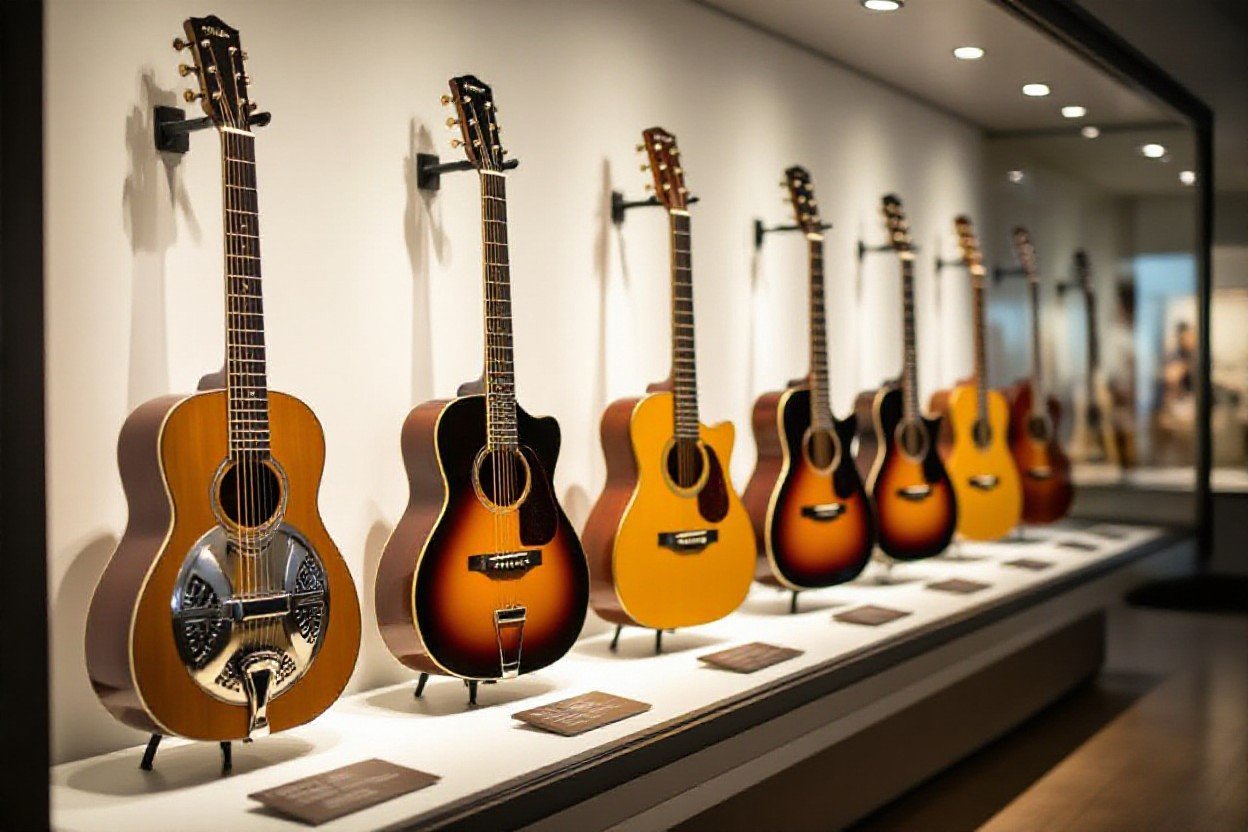
When you watch acoustic sessions on Instagram, you’ll keep seeing the same legends pop up again and again: Martin D-28, Gibson J-45, Taylor 814ce, Yamaha FG series. Each one pushed builders in a new direction. The D-28, born in the 1930s, basically invented the modern dreadnought sound for bluegrass and country.
The J-45 gave singer-songwriters that round, mid-heavy thump, while Taylor made super-bright, ultra-playable necks normal for younger players. Once these showed up, other brands had to level up fast.
If you zoom in on the Martin D-28 for a second, you’re talking solid spruce top, rosewood back and sides, and a booming low end that players like Hank Williams and Neil Young leaned on for decades.
Gibson’s J-45, nicknamed the “Workhorse,” used mahogany and a shorter scale length, so you get a softer feel and that punchy, warm strum you hear on a ton of folk records. Then Taylor jumped in during the 1970s with bolt-on necks and super-precise CNC shaping, so your guitar stayed consistent up the neck and felt almost electric-guitar comfy.
Even the Yamaha FG180 from the late 60s, which you might spot in your grandparent’s attic, proved you could get a reliable, loud acoustic without spending a fortune, and that shook up the whole budget market.
Later on, models like the Taylor 814ce and Martin’s cutaway acoustics added onboard electronics that actually sounded good, not like a quacky toy, so you could plug straight into a PA and keep your natural tone.
Bit by bit, these iconic guitars didn’t just shape history – they quietly shaped the guitar you’re probably holding right now.
Why Acoustic Guitars Rock: The Sound and Feel
Studio engineers will tell you that a single well-placed mic on a good acoustic can capture more emotion than a dozen effects on an electric, and you feel that as soon as you hit the first chord.
You’re not hiding behind distortion or pedals; it’s just your fingers, wood, and strings doing the talking. That kind of raw, unfiltered sound forces you to tighten your timing, your dynamics, even your breathing.
So when you strum harder, pick softer, or shift your hand slightly, your audience hears it instantly.
What Makes That Acoustic Sound So Special?
Every time you hit a string, the top of your guitar vibrates at around 80 to 1,000 Hz, and your whole body hears that in a super physical way. The wood, bracing, and even string gauge all shape how warm or bright it feels in your ears.
You get natural overtones that no plugin fully copies, which is why producers still track unplugged guitars for big choruses. That mix of air, resonance, and little squeaks under your fingers is what makes your sound feel alive.
The Vibe of Playing Acoustic vs. Electric
Stage performers often say their acoustic sets feel like a conversation, while electric sets feel like a show. When you play unplugged, every buzz and muted note is right there, so you play cleaner and more intentionally.
With an electric, you can lean into sustain, effects, and big bends, almost like you’re painting with sound. Both are fun, just different flavors of how you express yourself.
On acoustic, you usually sit up straighter, grip a bit firmer, and rely on your picking hand for volume and groove, so your rhythm tightens up fast. You might notice that after 30 minutes of acoustic practice, your fingers feel stronger and your chord changes cleaner, then when you switch to electric, everything suddenly feels easier.
Effects like reverb or delay on electric can smooth out mistakes, but on acoustic, you shape dynamics with your fingertips, palm muting, and attack. That contrast trains your touch so you can jump between an intimate campfire song and a loud, overdriven solo without losing your personality on either instrument.
My Take on Acoustic Guitar Heroes
Streaming playlists full of “acoustic covers” have kind of pushed old-school guitar heroes back into the spotlight, and you can actually trace so many current sounds straight to a handful of players. When you hear percussive tapping on TikTok, you’re hearing Tommy Emmanuel’s style get recycled.
When a slow fingerpicked ballad hits 20 million plays, that’s James Taylor’s DNA all over it. Your own playing, even if you don’t notice it yet, probably carries tiny pieces of these heroes in every chord change and little riff you throw in.
Who’s Made a Mark and Why They Matter
On most “acoustic legends” lists, you’ll see names like Andrés Segovia, Doc Watson, Joni Mitchell, James Taylor, Tommy Emmanuel, and Michael Hedges, and they’re there for good reason. They didn’t just play well, they changed what you can actually do with 6 strings.
Segovia hauled the guitar into classical concert halls in the 1920s. Joni used 50-plus tunings that still inspire indie writers today. When you grab a capo or try open D, you’re quietly borrowing from these folks, whether you know it or not.
The Influence of Legendary Players
On YouTube, you’ll see millions of views on lessons titled “Play like Tommy Emmanuel” or “Joni Mitchell tuning guide”, and that alone shows how deeply these players still shape your sound.
Every time you see a solo performer fill a whole room with just one guitar, that vibe traces straight back to artists like Segovia, Hedges, and Emmanuel, who proved a single player could sound like a full band.
So when you chase cleaner fingerstyle, bolder tunings, or more expressive strumming, you’re basically joining their long, ongoing conversation.
When you dive deeper into how these legends actually play, you start noticing very specific stuff you can steal for your own toolkit. Segovia pushed technique so hard that he helped formalize entire right-hand patterns that are still taught page by page in modern method books, so your classical exercises probably came from him.
Joni Mitchell logged tunings like DADGAD and CGDFCE, then wrapped them around pop structures, and modern players like John Mayer and Phoebe Bridgers keep echoing that mix.
And once you realize Michael Hedges treated the guitar like a piano, drum, and harp all mashed together, it suddenly feels normal for you to smack the top, tap harmonics, and expect one instrument to cover every role on stage.
Acoustic Guitars Today: What’s Trending?
You might be surprised that some of the hottest acoustic guitars right now are made from carbon fiber and sustainable woods instead of old-school rosewood. Players your age are grabbing smaller body shapes, thin necks, and built-in electronics so you can jump from bedroom to coffee shop gig without swapping gear.
Signature models from artists on TikTok and YouTube sell out faster than classic reissues, and even big brands like Taylor and Yamaha are pushing eco-friendly lines that actually sound huge on stage.
Are There New Technologies in Acoustic Guitars?
Modern acoustics are starting to feel a bit like sci-fi gadgets you can strum. You get built-in tuners, body-sensing pickups, and hybrid systems that blend mic and piezo tones in real time.
Some guitars, like the Yamaha TransAcoustic, add reverb and chorus effects right from the body with no pedals. There are even app-connected preamps that let you save EQ presets for different venues, so your tone stays steady whether you’re in a tiny room or a loud club.
Finding Your Perfect Fit in the Modern Market
Choosing your next acoustic is less about chasing a famous brand and more about matching how you actually play. You might find a smaller concert or 000 body feels better than a big dreadnought, especially if you’re under 6 feet tall or play mostly at home.
Slim C-shaped necks and shorter scales (like 24.75 inches) make chords easier if your hands get tired fast. And if you’re gigging, built-in electronics and a cutaway will probably help you more than fancy inlays ever will.
When you start trying guitars, don’t just strum a G chord and call it a day, play the same riff on three or four models in a row and notice how your fingers feel after a few minutes. You might like the punchy midrange of a mahogany body more than the brighter sparkle of spruce, or the balanced tone of a Taylor Grand Auditorium over a booming Martin dreadnought.
Price tags can be sneaky too; a well-set-up 500-dollar mid-tier guitar often beats a poorly set-up 1,500-dollar one, so check fret buzz, tuning stability, and how the neck sits in your hand.
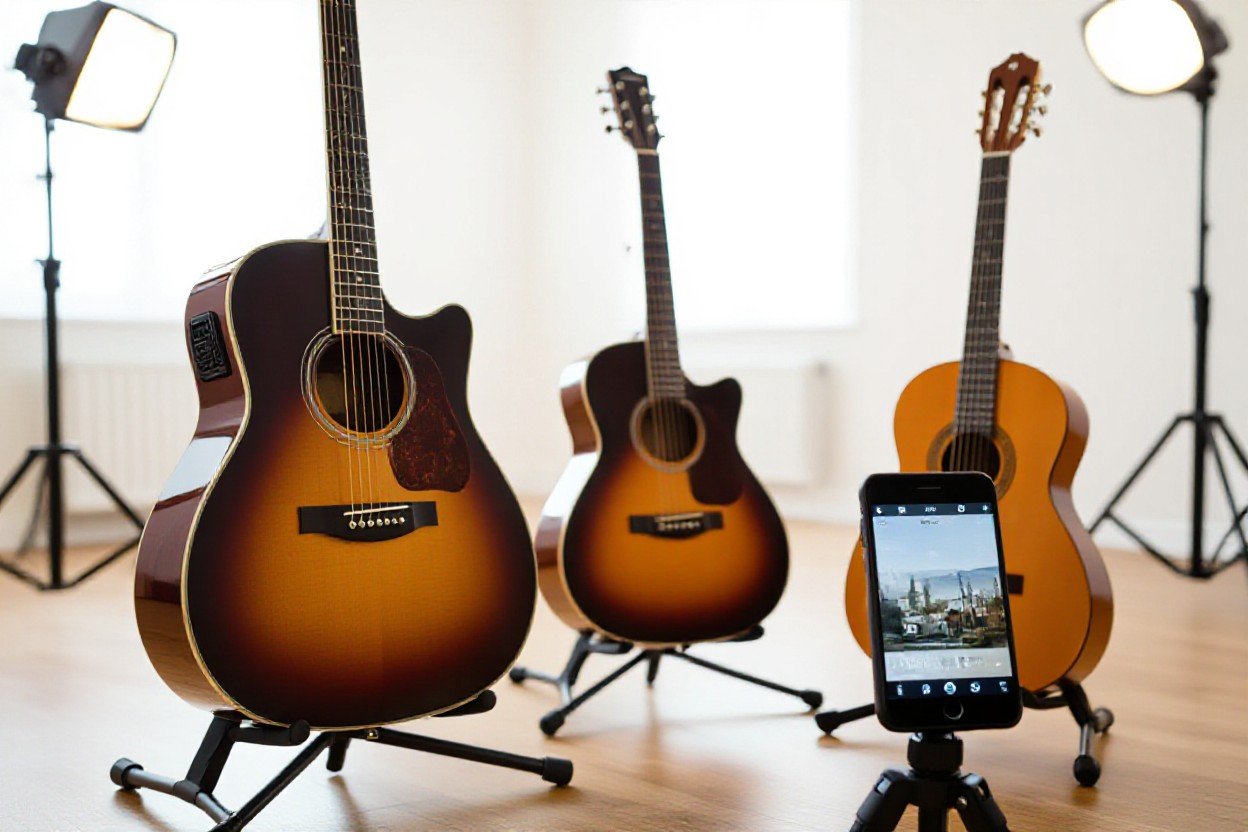
If you can, record short clips on your phone in the shop, then play them back at home with headphones. That little trick makes it way easier to hear which guitar actually fits your style instead of just which one felt exciting in the moment.
The Real Deal About Caring for Your Acoustic Guitar
Picture this: you pull your guitar out after a month, and the neck’s bowed, strings feel like barbed wire, and the action’s a mile high. That doesn’t happen by accident – it’s usually tiny bad habits stacking up.
When you treat your acoustic like a real instrument (not just furniture), it holds tune better, plays easier, and can literally last decades. Your future self will thank you every single time you sit down to play.
How Do You Keep It in Top Shape?
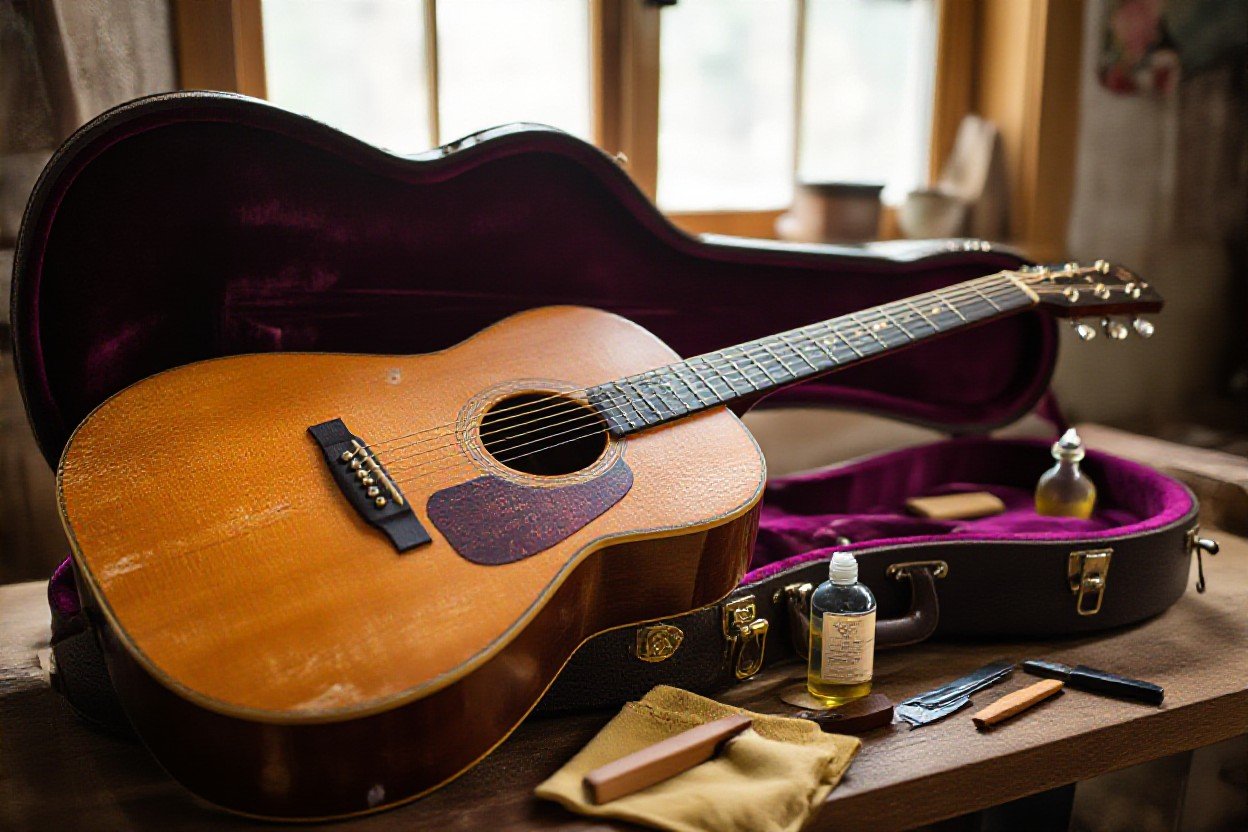
You start with simple stuff: wipe the strings after every session, store the guitar in its case, and keep it around 45-55% humidity. Swap strings every 2-3 months if you play a lot, or sooner if they turn dark and feel rough. A quick neck check once in a while and a pro setup, maybe once a year, keeps the action comfy. Treat the top like glass – no drinks on the same table, ever.
Common Mistakes to Avoid
Most damage comes from things you don’t think about: leaving your guitar by a heater, in a car, or on a stand next to a sunny window. Rapid swings from 30% to 70% humidity can warp a top faster than you expect.
Using furniture polish on the finish, metal tools near the soundboard, or cranking tuning pegs like screws also causes trouble. You want gentle, steady changes with pretty much everything you do.
One of the biggest silent killers is “just for a minute” – as in, you leave your acoustic in the trunk while you run inside, or park it by a radiator overnight. Wood doesn’t like that at all. Tops crack, fret ends get sharp, necks twist a bit, and suddenly your guitar feels nothing like it did out of the box.
Another sneaky one is over-tightening the truss rod because you saw a 2-minute YouTube tip. That’s how you strip threads or even crack the neck. On the cleaning side, using household sprays or soaking the fretboard in oil sounds harmless, but long-term, it can cloud the finish or soften the wood.
If you’re ever unsure whether something’s safe for your guitar, you probably shouldn’t be putting it on there.
Final Words
From above, you can see why the story of the acoustic guitar actually matters to your playing – it shows you where your favorite sounds came from and why your guitar feels the way it does in your hands.
As you mess around with chords or write your first song, you’re carrying pieces of history from old lutes, early Spanish builders, and classic folk players.
So next time you strum, you’re not just making noise.