
Popping and slapping on the guitar gives your grooves a bold tone and a percussive pulse. In this article, you’ll learn hand placement, thumb slap technique, popping with your fingers, timing, and how to shape tone and dynamics.
You’ll practice simple patterns, lock with bass or drums, and build control so your playing sounds musical and confident when you add fills and rhythmic variations.
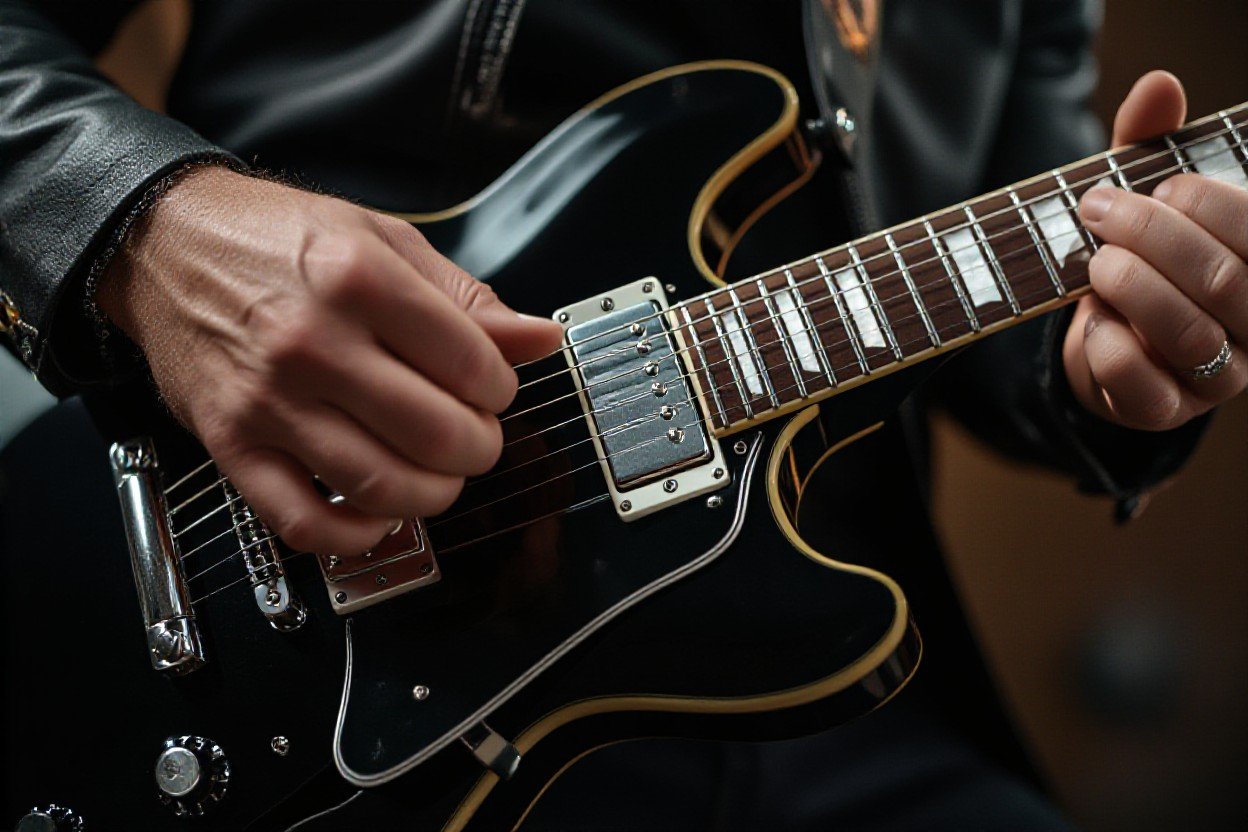
Understanding the Basics of Slapping and Popping
You need solid right-hand placement, timing, and dynamics to make these techniques sing; start slow at 60 BPM with a metronome and build toward 120-140 BPM as control improves.
Focus on striking near the bridge for bite, mute adjacent strings with your palm for clarity, and experiment with light electric strings (9-46) and action around 1.6-2.2 mm at the 12th fret to ease popping and reduce fret buzz.
What is Guitar Slapping?
Slapping the guitar means hitting the string with the side or pad of your thumb so it snaps against the fretboard and bridge, creating a percussive thump like funk bass. You’ll often aim 1-3 cm from the bridge for a bright click, combine it with palm muting for rhythmic clarity, and use it in grooves where each slap serves as both note and drum hit.
What is Guitar Popping?
Popping is pulling a string away from the fretboard with your index or middle finger and releasing it so it snaps back, yielding a sharp attack and harmonic content; you commonly pop higher strings (G, B, high E) to cut through a mix.
When paired with a thumb slap, popping creates the classic slap-pop interplay used in funk and percussive acoustic patterns.
To refine popping, isolate one string and practice controlled lifts at a 45-60° angle, then release cleanly; use a metronome, starting at 60 BPM and adding 5-10 BPM increments as accuracy improves.
Work on dynamic range-soft to aggressive pops-and try patterns like slap on 1, pop on 2 and 4 to internalize timing; slight compression and a treble boost on your amp will help the pop stand out in a band setting.
The Technique of Slapping
Keep your thumb slightly relaxed, strike the string with the bony edge about 1-2 cm from the bridge for a bright, percussive attack, and let controlled rebound do the work; practice at 60-80 BPM to lock timing before increasing speed, and combine slaps with palm muting and left-hand ghost notes to create rhythmic depth.
Proper Hand Positioning
Angle your wrist about 30-45 degrees so the thumb approaches the string cleanly, keep the knuckle low to maximize contact, and rest the palm lightly on the bridge for stability; maintain a loose grip so fingers can snap out for popping and dampen unwanted ringing with minimal left-hand touch.
Creating Distinct Sounds
Vary where and how you hit: a slap 1 cm from the bridge yields a snappy, clicky tone, while moving toward the neck warms the sound; pop with the index or middle finger behind the fret for clear harmonics, and alternate nail versus flesh and attack force to shift brightness and sustain.
Gear tweaks and small technique changes enhance those choices: roll off below ~80 Hz for clarity, boost 800-1,200 Hz by a couple dB for presence, use a compressor around 4:1 with 5-10 ms attack to control peaks, pick the bridge pickup for bite or the neck for roundness, and study players like Larry Graham to see how subtle timing and ghosted thumb taps define the pocket.
The Technique of Popping
You hook a fingertip or nail under the string, pull it back at roughly a 45° angle, and release to create the snap; use 1-3 fingers on your picking hand for speed and variety. Apply left-hand muting with the index or palm to shorten sustain when needed.
Practice slowly with a metronome at 60-80 BPM, then increase to 120-160 BPM for funk grooves; study bassists like Marcus Miller and Flea to adapt their pop timing to six-string phrasing.
Finger Placement and Motion
Place your popping finger so the pad or nail sits just behind the string, about 1-2 mm from the fretboard, then curl and pull back using wrist rotation rather than only the finger.
Use the index or middle finger for sharp attack and the ring finger for fuller growl; alternate fingers in 16th-note patterns for endurance. Keep the thumb anchored on the lower strings or bridge for stability and faster recovery between pops.
Achieving Different Tones
Move your pop point closer to the bridge for a brighter, cutting snap and toward the neck for a warmer, rounder sound; popping lower strings (6-4) yields more body, higher strings (3-1) cut more.
Experiment with nail versus flesh contact-nails give a glassier tone, flesh gives thump-and combine with left-hand palm or fret-hand muting to shape decay. Use a compressor to even dynamics and a slight boost around 2-4 kHz to enhance snap.
To refine tone further, vary release speed and string tension: a faster release increases harmonics and sustain, while lighter pulls emphasize the fundamental. Try popping natural harmonics at the 12th or 7th fret for bell-like accents; boost the 2.5-3.5 kHz band and cut below 100 Hz on your amp or EQ for clarity. In a band mix, double pops with a clean and a slightly overdriven track to make your pops both present and gritty.
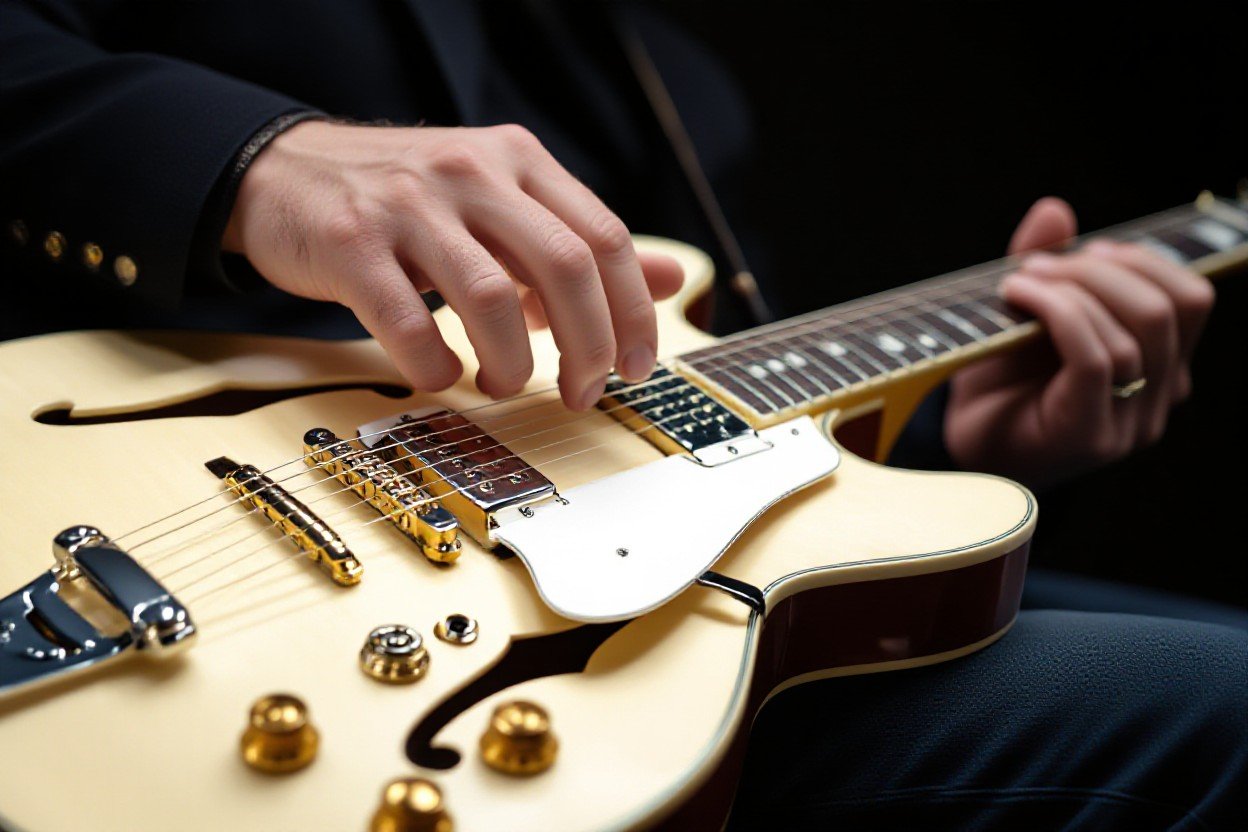
Combining Slap and Pop Techniques
Blend thumb slaps and finger pops to make a full, percussive sound: slap the low E about 1-2 cm from the bridge, then pop a higher string with one of your fingertips at a 45° angle. Practice at 80-120 BPM using 16th-note subdivisions.
Alternate single-thumb slaps with 1-2 finger pops, and add muted strokes for accents. Repeat 4-bar phrases to lock timing and build coordination between right-hand hits and left-hand fretting.
Rhythmic Patterns
Experiment with syncopation by placing pops on offbeats and keeping slaps on downbeats: try slap on beat 1, pop on the “&” of 2, ghost on the “e” of 3, slap on 4. Use a metronome set to 100 BPM and loop 8 bars while varying accents every two bars.
Count “1 e & a” aloud to keep subdivisions tight, then switch to triplets or straight eighths for contrast.
Creating Grooves
Use pocket and dynamics to shape grooves: play a 4-bar vamp with a slap on the root, a pop on the third, and light, muted notes between. Lock with a drum pattern at 90-110 BPM and reduce volume on weaker beats to make the strong beats pop.
Try alternating which string you pop-G then D-to change tonal color while keeping the same rhythmic frame.
Focus on space and repetition to deepen grooves: loop a short motif for 8-16 bars, then introduce small variations like doubling a pop, adding a ghost note, or shifting one slap earlier by a 16th. Record yourself at 100 BPM and compare takes to hear micro-timing shifts.
Use dynamics-soft pops, loud slaps-to create forward motion, and practice switching roles between thumb and fingers until transitions are smooth and consistent.
Famous Songs Utilizing Slap and Pop Techniques
Hear how slap and pop shape grooves across genres: Larry Graham’s thumb hits on Sly & the Family Stone’s 1969 “Thank You (Falettinme Be Mice Elf Agin)” define the style, Stanley Clarke’s 1976 “School Days” shows jazz-fusion soloing, Flea’s cover of “Higher Ground” (Red Hot Chili Peppers, 1989) brings slap into rock, and Les Claypool’s Primus work (“Tommy the Cat”, 1991) mixes slapping with odd meters; you can pick these apart bar by bar.
Iconic Bass Lines
Listen to the opening eight bars of “Thank You…” (1969) to hear Larry Graham’s alternating thumb hits and muted ghost notes; compare that to Stanley Clarke’s tight, syncopated pocket on “School Days” (1976) and Flea’s staccato bursts on “Higher Ground” (1989). You should count the rests, copy the 16th-note ghosting, and practice the exact attack-to-release timing in those phrases.
Notable Artists to Explore
Study players like Larry Graham (late 1960s), Bootsy Collins (1970s funk), Stanley Clarke (1970s fusion), Marcus Miller (1980s-90s session work), Victor Wooten (1990s onward), Les Claypool (1990s alternative), Flea (1980s-present), and Louis Johnson (1970s) to map different slap and pop vocabularies across styles and decades.
Focus on specific lessons from each: you can copy Graham’s thumb/pop pairing for pocket, Bootsy’s phrasing and space for groove, Clarke’s solo phrasing for melodic slapping, Miller’s clean pops for studio tone, Wooten’s double-thumbing and harmonics for technique, Claypool’s odd-meter accents for feel, and Flea’s high-energy attack for rock contexts.
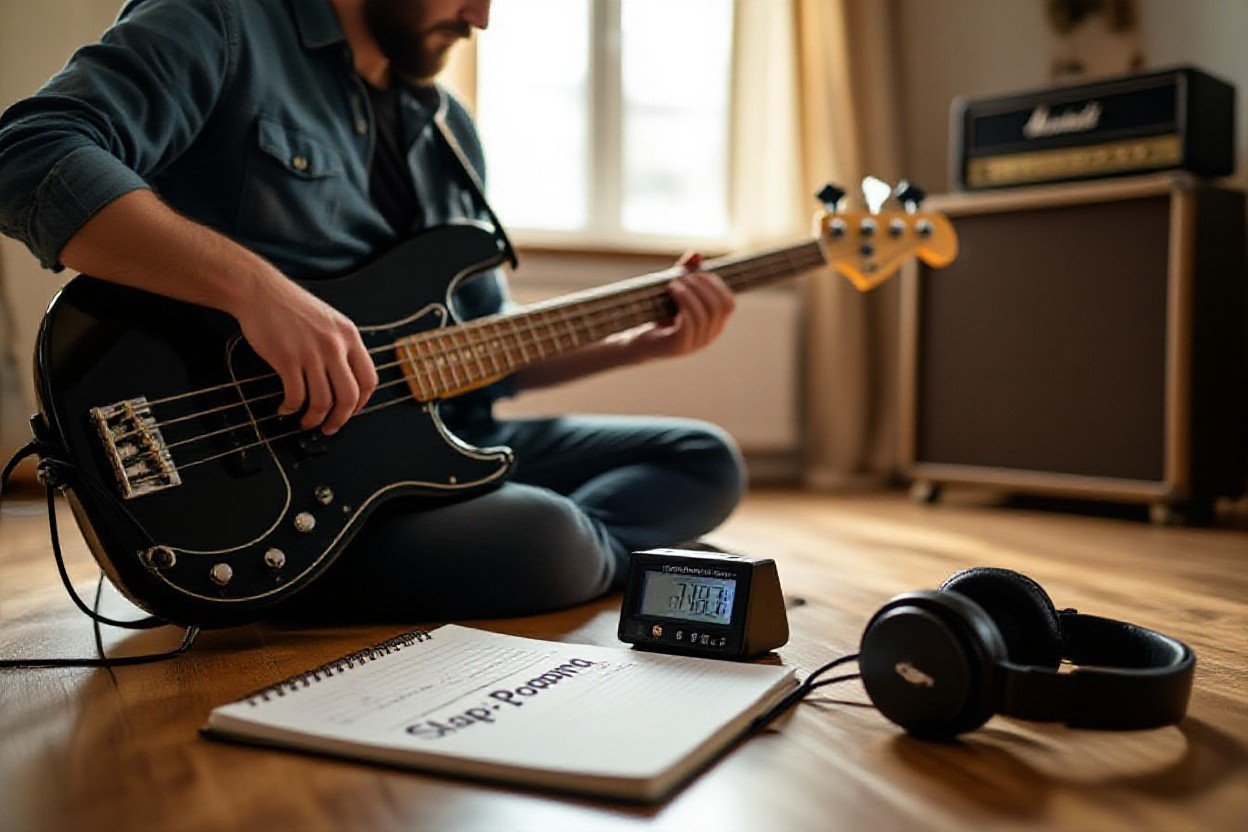
Tips for Practicing Slapping and Popping
You should set short, specific goals like 5-10 minute warmups, metronome work at 60-120 BPM, and daily repetition of a single slap-pop riff; use the How to Slap, Tap and Pop on Acoustic Guitar with Justin King as a model for tone and hand placement. Vary dynamics and string choice to build control. Perceiving subtle timing shifts will tighten your pocket and musicality.
- Short, focused sessions (10-20 min)
- Metronome increments (+5 BPM) for clean hits
- Alternate strings and mute levels each day
Exercises for Beginners
You can start with three simple drills: 1) slow thumb slap on low E at 60 BPM for 2 minutes, 2) pop open G string every other beat for feel, 3) combine slap-pop on adjacent strings for 4 measures; aim for 7-10 minutes daily to build consistency and timing.
- Thumb-only slap, 60 BPM, 2 minutes
- Single-string pop, focus on clean release
- Combine slap-pop, 4-bar loops
Beginner Exercise Breakdown
| Exercise | Goal |
| Thumb slap on low E | Develop attack and timing |
| Pop on G or B | Improve clarity and release |
| Slap-pop combos | Coordinate both hands |
Advanced Techniques to Master
You should work on double-thumb slaps, ghosted muted notes, syncopated slap-pop patterns at 120-160 BPM, and octave pops; drill 15-30 minute sessions with backing tracks to integrate tone, timing, and dynamics into musical phrases.
- Double-thumb accents across strings
- Ghost-note rhythm patterns for groove
- Octave pops and harmonic slaps
Advanced Technique Breakdown
| Technique | Practice Focus |
| Double-thumb slap | Speed and consistent attack |
| Ghost notes | Control of mute depth |
| Octave pops | Accurate fretting and timing |
For deeper progress, you should isolate one advanced element per week, spend three 10-minute blocks: slow technical warming, tempo building (+5 BPM steps), then musical application with a loop or backing track; track improvements by logging tempo, error rate, and a short audio clip each session to measure gains.
Conclusion
Now you have seen how slapping and popping shape tone and rhythm on the guitar; with steady practice, you build control, timing, and creative ideas. Focus on clean hits, tight muting, and adding small melodic lines to keep grooves musical.
Use slow practice and adjust finger position until the sound is clear, then raise the speed. Trust your ear, play with intent, and your technique will become a strong part of your musical voice.
FAQ
Q: What is guitar slapping and popping, and how do I begin?
A: Slapping is hitting the string with the thumb to make a percussive bass sound. Popping is pulling a higher string away from the fretboard with a finger and letting it snap back.
To begin, use a comfortable sitting or standing position, mute strings you do not want to ring with the palm, and practice a slow pattern: slap a low string, then pop a high string. Start very slow with a metronome, use short bursts of practice, and build speed only when the notes stay clean.
Q: How should my hands be placed for the best sound?
A: Keep your strumming hand relaxed. Use the fleshy side of the thumb near the joint to slap, not the nail. Angle the wrist so the thumb hits the string cleanly. For popping, hook the string with your index or middle finger and pull straight up, then release.
Use your palm or fretting hand to mute nearby strings so only the notes you want are heard. Keep fingers close to the strings when not playing to cut down on unwanted noise.
Q: What practice steps and gear tips help me improve faster?
A: Practice with a metronome, starting slow and adding five beats per minute when patterns are steady. Drill short patterns for 5-10 minutes, then play them with a simple groove. Record yourself to hear timing and tone.
For gear, medium string gauge and lower action make popping easier, while a pickup with clear mids helps the slap stand out. A light compressor can even out volume, but do not overuse it. Change one thing at a time so you can hear what helps.