Jimi Hendrix’s impact on guitarists is huge. His new style changed music forever. Today, many guitarists say he’s a big influence on their playing.
Hendrix mixed many music styles together. He blended rock, blues, funk, and psychedelia. This made his sound unique and deep. Now, many artists mix styles, thanks to Hendrix.
Hendrix also loved using effects pedals. He used distortion and fuzz to make his guitar sound intense. Today, many guitarists use these effects to make their own sounds.
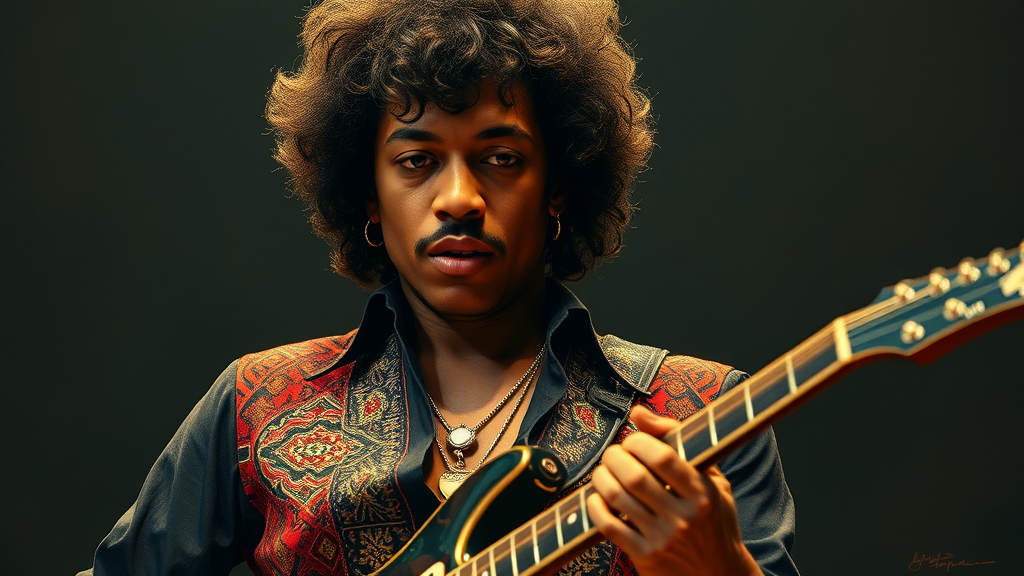
Key Elements of Jimi Hendrix’s Guitar Style:
- Whammy Bar Techniques: Hendrix was great at using the whammy bar. He made bends and vibrato sound amazing. Now, players use it more creatively.
- Unconventional Chord Voicings: Hendrix’s chord progressions opened up new sounds. Today, guitarists use these to add depth to their music.
- Improvisation: Hendrix’s improvisation style encouraged creativity. It shows that live performances can be truly special.
- Signature Licks: Hendrix’s songs have famous riffs. “Purple Haze” and “Voodoo Child” are often played and loved by many.
Hendrix’s stage presence was unforgettable. His charisma made guitar playing exciting. Today, musicians try to connect with fans through their shows.
Hendrix’s songwriting also had a big impact. His songs often talked about love, spirituality, and social issues. His way of writing has inspired many artists to make meaningful music.
Hendrix’s visual style was also influential. His colorful outfits and guitar work showed the importance of personal expression. Today, artists try to show their unique style through their looks and music.
Guitar schools and online platforms celebrate Hendrix’s influence. They offer courses on his techniques. Websites like Guitar World and JimiHendrix.com share his legacy with new fans.
Jimi Hendrix is a huge influence in guitar playing. His creativity and charisma inspire many. His legacy is in every note played by guitarists today.
Iconic Moments from Jimi Hendrix’s Career
Jimi Hendrix is one of the greatest guitarists ever. His unique style and techniques changed music. Let’s look at some unforgettable moments from his career.
Woodstock Performance
At the 1969 Woodstock Festival, Hendrix played “The Star-Spangled Banner” as the last act. This performance was a technical marvel and a powerful anti-war statement. It showed his raw emotion and creativity, marking a turning point in live performances.
Monterey Pop Festival
In June 1967, Hendrix debuted in America at the Monterey Pop Festival. He made a memorable impact, setting his guitar on fire at the end. This moment showed his passion and intensity, becoming one of the most iconic performances in music history.
Electric Ladyland Release
In 1968, Hendrix released “Electric Ladyland,” showing his creativity and musical boundary-pushing. The album included hits like “All Along the Watchtower” and “Voodoo Child (Slight Return).” It solidified his status as a musical genius and innovator.
Making Waves with the Band of Gypsies
In 1970, Hendrix formed the Band of Gypsies. Their New Year’s Eve performance at the Fillmore East was unforgettable. This band explored themes of race, identity, and music’s power. Their live album, “Band of Gypsies,” is considered one of the best, showing Hendrix’s versatility.
The First Date with the Guitar
Hendrix’s love for the guitar started at 15 when he got his first one. His dedication and experimentation led to new techniques. This foundation laid the groundwork for his groundbreaking career.
Legacy of Innovation
Hendrix’s guitar playing inspired many musicians. He used effects like distortion and fuzz, changing how guitarists compose and perform. His work in various genres paved the way for future artists to explore freely.
Enduring Influence
Even after his death in 1970, Hendrix’s influence is strong in the music industry. Bands and guitarists continue to find inspiration in his work. Festivals like the Jimi Hendrix Festival celebrate his legacy, ensuring his memory lives on.
Jimi Hendrix created moments that went beyond music. His unique style, emotional depth, and fearless creativity captured millions of hearts. Today, he is remembered as a true guitar legend, leaving a lasting impact on the world.
For more on Jimi Hendrix’s impact and life, check out Rolling Stone’s legendary interviews.
Analyzing Hendrix’s Unique Playing Techniques
Jimi Hendrix is a monumental figure in music, known for his electrifying performances and groundbreaking guitar techniques. His style blended rock, blues, and psychedelia, creating an intoxicating experience. To appreciate Hendrix’s artistry, it’s key to analyze his distinct techniques that set him apart.
Use of Feedback and Distortion
Hendrix was known for his skill with feedback and distortion. He used special equipment and knew a lot about sound. Here’s how he made his unique sounds:
- He used high-gain amplifiers to get feedback. This made notes last longer, creating the “crying” sound in songs like “Voodoo Child.”
- He also used effects pedals like fuzz and wah-wah. The wah-wah pedal made his solos sound like voices, adding to their dynamic feel.
Fingerpicking Techniques
Hendrix was also known for his fingerpicking. He used his fingers and a pick to play the strings. This made his sound more detailed and clear, in solos and melodies. Here are some key points about his fingerpicking:
- He mixed fingers and picks to get different sounds fast. This made his playing more complex and interesting.
- His fingerpicking let him play notes quickly. This is heard in songs like “Little Wing,” where it creates a dreamy feel.
Innovative Chord Progressions
Hendrix also changed how he used chords. He used unusual chord voicings and extended chords. This made his music complex but inviting. Some key points include:
- He liked dominant seventh chords for a bluesy rock sound. This is seen in “Hey Joe,” blending blues and rock.
- He often changed guitar tunings to get new sounds. This is heard in “Purple Haze,” where it creates unique tones.
Expressive Bending and Sliding
Hendrix was great at bending and sliding strings. He could stretch notes and move smoothly between them. This added emotion to his playing. Here’s how he mastered these techniques:
- He bent notes hard to add a bluesy feel. This connected with listeners on a deep level.
- He used slides to move between notes smoothly. This is heard in “The Wind Cries Mary,” where it makes the melody soar.
Looking at these techniques helps us understand Hendrix’s genius. His use of feedback, fingerpicking, chord progressions, and expression created a sound that defined a generation.
Hendrix’s unique techniques are key to guitar history. By studying them, we can appreciate his music and the artistry behind it. Whether you’re an experienced guitarist or just starting, learning about Hendrix can improve your playing and inspire your music.
The Legacy of Jimi Hendrix in Music History
Jimi Hendrix changed music forever. His unique guitar playing, songwriting, and performances inspired many. His legacy continues to touch fans and artists today.
Jimi was born on November 27, 1942, in Seattle, Washington. He started playing guitar early and quickly got good. His sound, with fuzz and feedback, helped start psychedelic rock.
Hendrix mixed different music styles in his songs. He combined rock, blues, jazz, and R&B. This made his music appealing to many. Songs like “Purple Haze” and “Hey Joe” show his talent.
His live shows were legendary. Jimi played guitar in amazing ways, like behind his head. His performances at the Monterey Pop Festival in 1967 are famous. Fans loved him for his music and showmanship.
Hendrix was more than a musician. He was a symbol of the 1960s counterculture. His bold style and rejection of norms inspired many. He showed musicians could use their music to speak out.
Jimi was also a pioneer in guitar technology. He used effects pedals and feedback in new ways. This inspired others to experiment with their music, changing rock and other genres.
- Many musicians, like Eric Clapton and Stevie Ray Vaughan, were influenced by Hendrix. His unique style and improvisation can be heard in music today.
- Hendrix encouraged artists to be themselves, not follow the crowd.
- His version of Bob Dylan’s “All Along the Watchtower” is a classic. Hendrix’s soulful touch made the song unforgettable.
The Jimi Hendrix Experience released only three albums, but they are classics. Albums like “Are You Experienced” and “Electric Ladyland” changed music. They are loved and respected today.
Even after his death on September 18, 1970, Jimi’s legacy grew. His music lives on through tributes and documentaries. The official Jimi Hendrix website is a great resource for fans.
Jimi Hendrix’s impact on music is huge. His creativity, performances, and influence have shaped rock music. His legacy inspires new artists, ensuring his music will live on.
Jimi Hendrix’s Impact on Rock and Blues Genres
Jimi Hendrix was a game-changer in rock and blues. His guitar skills, new techniques, and vision left a mark that inspires today. His influence is felt across genres, touching fans and musicians for decades.
Hendrix’s guitar playing was unlike anyone else’s. He pushed the limits of what you could do with a guitar. His use of feedback and pedals created new sounds. Tracks like “Purple Haze” and “Voodoo Child” showed his technical skill and emotional depth.
Hendrix mixed rock and blues in a unique way. His blues roots are clear in many songs. For example, his version of “All Along the Watchtower” brings a raw energy to Bob Dylan’s classic.
The 1960s were a key time for Hendrix’s rise. The era was all about change and trying new things. Hendrix’s shows, with their bold outfits and incredible solos, captured the spirit of the time. They inspired many fans and musicians.
Many artists say Hendrix was a big influence. Rock legends like Eric Clapton and modern stars like John Mayer show his impact. Clapton, for instance, credits Hendrix’s improvisation for shaping his own music. This shows how Hendrix’s work deeply influenced music.