Key Factors to Consider When Choosing the Right Guitar Pick
Understanding Pick Thickness and Its Impact
When picking a guitar pick, start with its thickness. Picks range from very thin (0.38mm) to very heavy (over 1.5mm). The thickness affects how you play and the sound you get.
Thin picks are great for light strumming and acoustic guitars. They make a crisp, bright sound. Thick picks offer more control and a warmer tone, perfect for solos and electric guitars.
Think about your playing style and what you focus on. Do you play rhythm or lead parts more?
Material: How It Shapes Tone and Feel
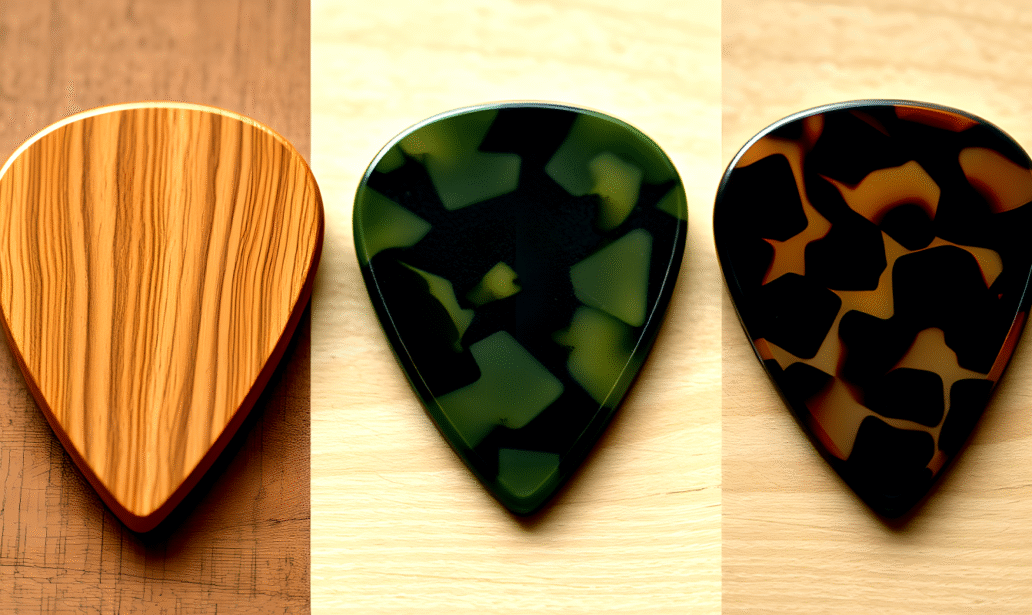
The pick’s material affects both comfort and tone. You can find picks made from celluloid, nylon, delrin, metal, or wood. Each material has its own feel and sound.
Celluloid picks are smooth and classic. Nylon picks are flexible and grippy. Delrin picks are smooth for speed. Metal or glass picks make sounds brighter, but they can wear out strings.
Try different materials to find the right mix of comfort and tone. For more info, check out Dunlop’s guide.
Pick Shape and Size
Picks come in various shapes, not just the standard teardrop. Jazz picks, triangles, and custom shapes are also available. The shape affects how you play fast notes and how comfortable it feels in your hand.
Jazz picks are small and precise for lead lines. Triangular picks have three tips and a big grip area, great for big hands or stability. Try different shapes to see what works best for you.
Grip and Texture
Grip is important when choosing picks. Some picks have special finishes or textures for better grip. If your hands sweat or you prefer a firm hold, look for textured or non-slip picks.
Better grip makes playing easier and prevents dropping your pick. It’s a small detail that can make a big difference.
Genre and Playing Style
The music you play affects your pick choice. Strummers might prefer lighter, flexible picks. Lead players and shredders need thicker, stiffer picks for speed and clarity.
If you play different styles, keep a variety of picks. Famous guitarists share their favorites on sites like Guitar World. Their insights can help you choose.
Testing and Personal Preference
Try out different picks to find what works for you. Local music stores often have sample packs. This lets you experiment without spending a lot.
Listen to your fingers and ears. What feels and sounds good to you is key. Stores also have demo areas for trying before buying, making it easier to find the perfect pick.
Consider Longevity and Cost
Some picks last longer than others, thanks to materials like Ultem or metal. If you play a lot, durability is key. Cheap picks can wear down fast, hurting your performance. Spending a bit more on a pick can save money in the long run and improve your playing.
Quick Reference: Key Aspects When Shopping for a Guitar Pick
- Thickness: Matches your playing style and desired tone
- Material: Impacts grip, comfort, and sound
- Shape and Size: Affects control and precision
- Grip: Prevents slipping, improves playability
- Genre: Certain picks work better for specific styles
- Personal Preference: Always test before settling
- Durability and Price: Consider longevity for frequent playing
Finding the right guitar pick can change your playing. Remember, your pick choice is very personal. There’s no single “best” pick for everyone. By trying different picks, you’ll find one that feels like an extension of your fingers. For more tips and reviews, check out Ultimate Guitar.
Exploring Different Guitar Pick Shapes and Their Impact on Playability
Understanding Guitar Pick Shapes
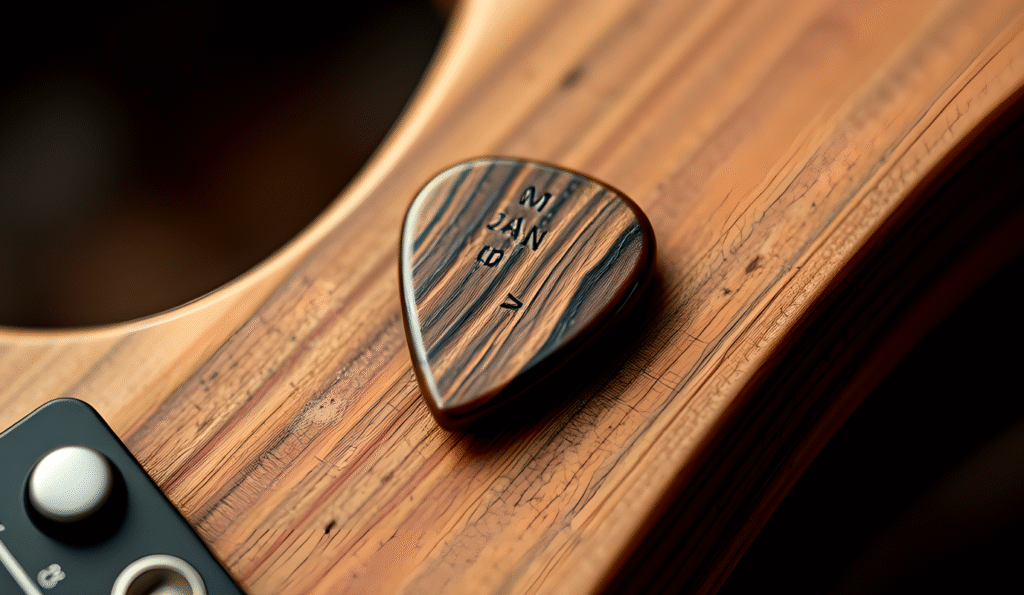
The shape of your pick is key to your guitar playing. Different shapes can change how comfortable you feel, how fast you play, and the sound you get. Whether you’re playing chords, solos, or experimenting, the right pick shape can make a big difference. This guide will show you how different shapes affect your grip, attack, and playability.
Common Pick Shapes and Their Features
- Standard or Teardrop: This shape is familiar to most guitarists. It’s versatile for all playing styles, from acoustic to electric. The teardrop pick is great for beginners because it’s easy to hold and comfortable on the strings.
- Jazz or Small Pointed: These picks are small and sharp, perfect for fast playing. They offer precise control and sharp attacks, ideal for solos in jazz and rock.
- Triangle: Triangle picks have three tips and a wide grip area. They’re durable and good for players who need a strong grip. Bass players and rhythm guitarists often prefer them.
- Shark Fin or Asymmetric: These picks have a wavy edge for different textures. They’re great for switching between soft strums and sharp picking without changing picks. They’re versatile for many playing styles.
- Stubby or Rounded: These picks have a soft attack and smooth sound. They’re good for players who want a mellow tone, often used in jazz or fingerstyle.
How Shape Impacts Your Playing Experience
The shape of your pick affects your playability directly. A larger pick gives a strong grip, reducing hand fatigue. A smaller pick is better for fast, technical playing, as it has less resistance on the string. Some players find it helps with timing and rhythm.
The tip of the pick is very important. Pointed shapes are great for speed and precision, helping with advanced techniques like alternate picking. Rounded tips are smoother and gentler, good for beginners or those who prefer a softer sound. Thicker or triangular shapes last longer, as they wear down more evenly.
Selecting a Pick Shape for Your Genre
Not all shapes fit all musical styles. Here’s how musicians choose pick shapes for their music:
- Acoustic Folk and Strumming: Standard and triangle picks offer balance and comfort for extended chord work.
- Rock and Metal: Jazz and pointed picks provide accuracy and clarity for fast licks and palm-muted riffs.
- Jazz and Blues: Smaller, rounded picks enhance nuance and expression, improving articulation and phrasing.
- Bass Guitar: Large triangle or stubby picks withstand heavy attack and produce rounded, thick tones.
Trying Out Different Picks
The only sure way to find a perfect match is by experimenting. Take time to try each pick on different guitars and musical styles.
Many players are surprised by how much their technique improves with a shape that suits their individual needs. For a deeper dive into the tactile and tonal impacts, browse resources like Jim Dunlop or explore detailed breakdowns on Fender’s guide to guitar picks.
Understanding Pick Thickness and Its Effect on Tone
Pick Thickness: A Key Factor in Shaping Your Guitar Sound
When you start exploring different guitar picks, you may notice a surprising variety in thickness options. This simple dimension—often measured in millimeters or described as thin, medium, and heavy—can make a profound difference in how your guitar sounds and feels. Understanding how various pick thicknesses affect your playing and tone is essential to choosing the best pick for your unique style.
How Different Thicknesses Change Playability and Tone
At its core, the thickness of your pick helps shape your experience with each strum or pluck. Here’s how different thicknesses typically perform:
- Thin Picks (0.40mm – 0.70mm): Thin picks give you a bright, snappy, and shimmering tone. They’re flexible, so they tend to glide gently over your strings. This feature makes them ideal for strumming on acoustic guitars. If you often play folk or pop, these picks help avoid overpowering your sound. But, if you need punch for solos, a thin pick might feel too light and produce less control.
- Medium Picks (0.70mm – 0.85mm): Medium picks strike a balance between flexibility and stiffness. They offer more control than thin picks, making them suitable for a mix of strumming and picking. Many guitarists find medium picks versatile enough for both rhythm and lead parts, whether electric or acoustic.
- Heavy Picks (0.85mm – 1.2mm and above): Heavy picks deliver a warmer, rounder tone and give you enhanced precision. These picks are less likely to bend, so you get a stronger attack and improved accuracy, making them great for fast lead runs or complex riffs. Musicians who play rock, metal, or jazz often choose heavier picks for this reason.
Why Pick Thickness Impacts Your Tone
The thickness of a guitar pick directly affects how it interacts with your strings. Thinner picks flex more easily, which can absorb energy and produce softer, brighter tones. In contrast, a thicker pick has more rigidity, transferring more force to the string and creating a louder, more defined sound. If you’re curious to explore the science behind this, consider checking out resources at Fender’s official guide to guitar picks.
Considerations for Electric and Acoustic Guitars
It’s worth remembering that pick thickness interacts differently with electric and acoustic instruments. On an acoustic guitar, every nuance gets amplified by the body, so thinner picks can keep strumming tones clear. On electric guitars, heavier picks can help punch through effects and amplifiers, aiding in clarity during solos or heavy riffs. Musicians experimenting with different soundscapes often swap picks based on the guitar in use, as described by the experts at D’Addario.
Matching Pick Thickness to Your Playing Style
Your technique can also guide your pick choice:
- Rhythmic Strumming: Lighter, thinner picks avoid harsh volume spikes when sweeping across all six strings.
- Articulate Picking: Heavy picks offer superior accuracy for quick arpeggios and solos.
- Versatile Styles: Medium picks are a happy medium for players who shift between picking and strumming.
Experimentation Yields the Best Results
No single thickness works for every guitarist or genre. Choose a range of picks to experiment with. Notice how slight variations impact your sound and comfort.
Many players keep several picks on hand for different situations. A light pick for mellow acoustic sets, and a heavy pick for gigs where precision and power matter most.
To discover which pick thickness complements your instrument and playing style, visit Ultimate Guitar’s forums. Trying a mix of picks over time helps you fine-tune the balance between tone, comfort, and control. As your skills and tastes evolve, don’t be afraid to revisit your choice—often, your preference in pick thickness will grow alongside your musical journey.
Material Choices: How Different Pick Materials Influence Sound
Understanding the Impact of Pick Materials on Your Guitar Tone
The pick you use can have a big impact on your sound. The material of the guitar pick affects everything from how bright or warm your notes sound to how easy it is to strum or pluck the strings. If you want to shape your tone with intention, thinking carefully about what your pick is made from can be a game-changer.
Common Guitar Pick Materials and Their Sound Profiles
Players may be surprised by the range of materials available, from classic plastics to natural choices and even metals. Each material offers a distinct texture, flexibility, and attack. Here’s a closer look at how some of the most popular materials color your sound:
- Celluloid: One of the earliest and most popular pick materials, celluloid tends to give a warm, rounded sound with a little extra brightness. Many jazz and classic rock guitarists love celluloid for its balanced feel and vintage response.
- Nylon: Known for its flexibility, nylon creates a snappy, smooth sound. It’s a go-to for acoustic players who want softer, more muted attacks. Nylon picks can bend a bit without breaking, meaning they’re comfortable for strumming but may feel less sturdy for heavy picking.
- Tortex (Delrin): These picks are recognized for their durability and grippy texture. Tortex delivers a brighter and slightly sharper sound compared to celluloid or nylon. Punk, metal, and rock players tend to prefer this material for its punchy articulation.
- Ultem: A newer plastic, Ultem mimics the hard, glassy attack of tortoiseshell picks—without any animal products involved. It gives a quick, crisp sound with great projection, making it a preferred choice for bluegrass and fast lead playing.
- Wood: Wooden picks such as rosewood or ebony infuse your playing with a warm, unique timbre. They absorb some high frequencies, giving you mellow, organic tones. Wood picks wear down quicker and can break if used too aggressively.
- Metal: Stainless steel, brass, and other metal picks make your notes ring out with crisp clarity and enhanced sustain. Be cautious, though—these picks may wear your strings out faster and can sometimes sound too harsh for softer styles.
- Stone: Unique and eye-catching, stone picks offer a sharp, articulate tone with excellent durability. Their density produces pronounced volume and attack, but they may feel unfamiliar if you’re used to flexible plastic picks.
Choosing the Right Pick for Your Playing Style
Picking the best pick material depends on what kind of music you play and the sound you want to achieve. If you favor quick picking with plenty of presence, hard plastics or metals might be your favorite. For warmer, gentle strumming, celluloid or wood blends beautifully with acoustic guitars. For players interested in exploring further, many helpful guides and pick selectors are available at Dunlop, a trusted name in the guitar accessory world.
Combination packs, like those found at Fender’s guitar pick guide, are a great way to experiment and discover which combination is right for you.
Consider Your Comfort, Not Just Your Sound
Tone is key, but feel matters too. Some picks have textured grips to prevent slipping, perfect for sweaty hands. Others are slick, making them easy to move over strings.
Try out picks in person at your local music shop, or order variety packs to test different options.
Matching Your Guitar Pick to Your Playing Style

Understanding Guitar Picks: Materials and Their Impact
Choosing the right guitar pick is more than picking a color or shape you like. The material of the pick can shape your tone, feel, and confidence while playing. Common materials include celluloid, nylon, tortex, and even wood.
Celluloid offers a bright, crisp sound, while nylon is usually more flexible and delivers a warmer touch. Tortex picks, respected for their grip and durability, are the go-to choice for many professionals in rock and blues. Exotic woods or stone can further affect your attack and dynamic control, though they are usually reserved for niche preferences.
To get a deeper look into material options, you can visit D’Addario’s guitar accessory resources for more insights on pick composition and how it influences your sound.
Pick Thickness: Finding the Right Strength for Your Technique
The thickness—also called pick gauge—significantly affects your sound and how you interact with your instrument. Picks generally range from ultrathin (0.38mm) to heavy (over 1.5mm).
If you love quick, rhythmic strumming, thin picks might suit you. They provide more flex, which helps avoid overpowering the strings with heavy attacks. Medium picks are great if you round out your playing with both chords and single-note riffs; they deliver enough snap and strength without sacrificing flexibility.
Heavier picks excel in lead work, metal, and jazz because they give you more precision and thicker tone on each note. Explore real-world examples and comparisons on Guitar World’s gear section for tips on choosing the right thickness.
Grip and Texture: Comfort in Your Hands
Comfort and control are essential, even for fast or technical playing styles. Many modern picks feature textured grips, raised logos, or even rubberized coatings to prevent slipping. Slick-surfaced picks can spin or slide in sweaty hands, which can hurt your performance, specially during long gigs or high-energy sessions.
Some players choose picks with holes punched in the center for better grip, while others prefer matte or sanded finishes. Try several grip styles to find one that feels secure and natural. For more on grip styles and ergonomic design, check out the accessory reviews on Fender’s official guide to picks.